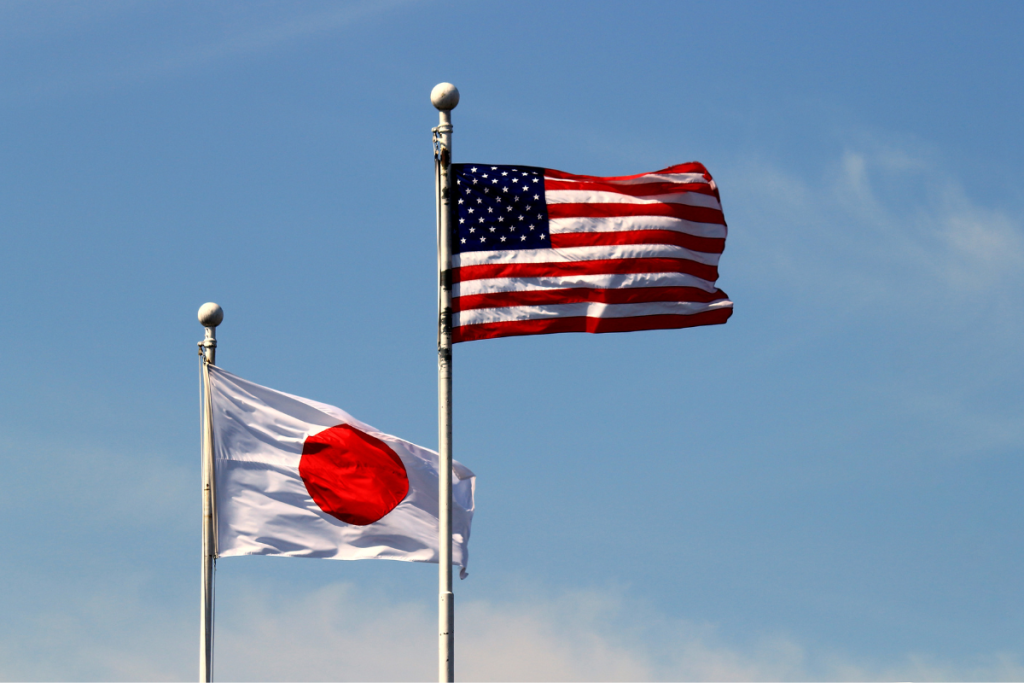
The U.S. has locked in a sweeping tariff deal with Japan that reshapes trade flows across autos, aerospace, and agriculture while handing Washington unusual control over $550 billion in Japanese capital earmarked for American projects. The agreement lowers headline duties from 25% to 15% but embeds conditions that could redefine how allies negotiate tariff relief with Washington.
Tariffs Calibrated, Not Layered
The order clarifies that the 15% tariff is not additive. Instead, it brings imports up to a 15% floor: goods previously taxed at a lower rate will see duties rise, while products already facing higher tariffs will remain unchanged. The approach aligns the U.S. with the European Union’s method, offering exporters predictability while closing loopholes. Importers can apply for customs refunds where overpayments occurred after the Aug. 7 retroactive date.
Sector-specific measures add nuance. Automakers from Japan will face 15% tariffs rather than the earlier proposed 25% under Section 232, while rules of origin for vehicles and parts are set for further clarification. A reciprocal concession allows U.S.-built, safety-certified vehicles to be sold in Japan without redundant testing, a longstanding friction point in transpacific auto trade. Pharmaceuticals are another key carve-out: generic drugs, precursors, and raw ingredients may qualify for 0% rates where domestic alternatives are scarce.
Agriculture and Aerospace Anchors
The deal extends beyond tariffs, embedding purchase commitments. Japan agreed to boost U.S. rice imports by 75% and secure $8 billion annually in agricultural goods such as soybeans and fertilizers. Aerospace cooperation is also underscored: while the executive order avoided fresh specifics, a July White House fact sheet noted Japan’s intention to buy 100 Boeing aircraft alongside U.S. defense systems.
Investment pledges add heft. Japan will direct $550 billion into U.S. projects chosen by Washington, with the stated aim of expanding domestic manufacturing and creating jobs. This measure echoes Japan’s role as a top foreign investor in U.S. assets, already exceeding $800 billion in cumulative direct investment, according to U.S. Department of Commerce data.
Why This Matters Beyond Tariffs
While the 15% rate appears uniform, the carve-outs reveal a strategy designed to preserve leverage. Agriculture and autos are the near-term currency, but pharmaceuticals and minerals point to longer-term supply security priorities. The bigger test will be whether Japan’s investment commitments materialize in ways that structurally rebalance the $68 billion U.S. trade deficit. Recent trade data shows Japan accounts for just over 4% of U.S. imports, meaning the success of this agreement hinges less on duty collection and more on how effectively it redirects capital, capacity, and demand across critical industries.