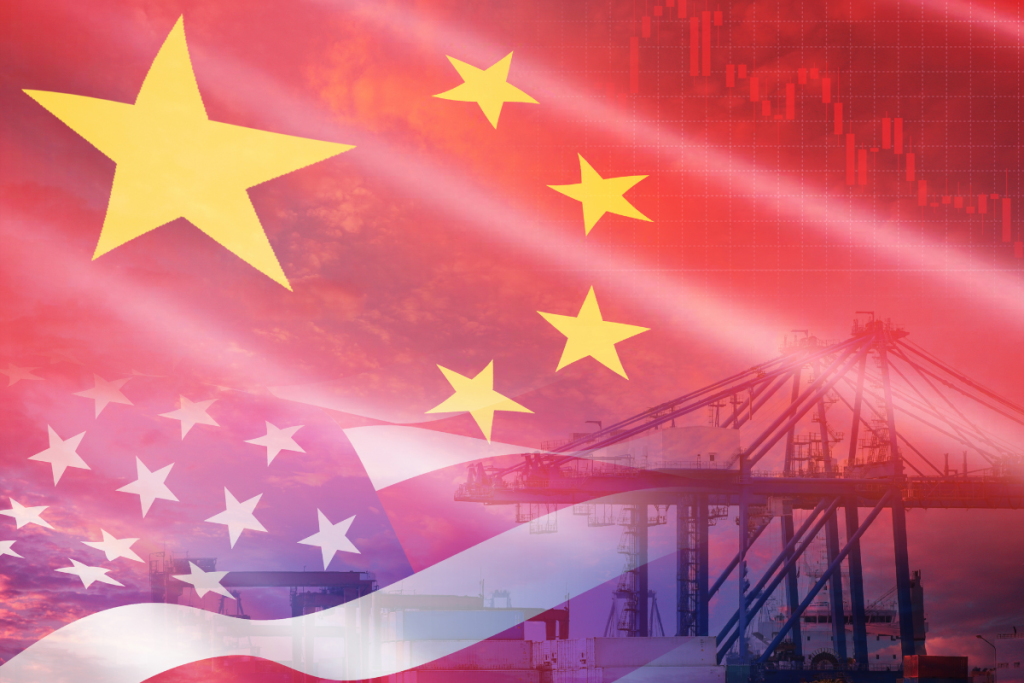
After months of escalating trade measures, Washington and Beijing have signaled a temporary easing in their dispute. A bilateral meeting in South Korea has delivered a framework to ease tariff pressure, suspend investigations tied to supply chains and shipping, and delay critical export controls, a notable pause in a conflict that has weighed on global sourcing and logistics planning.
Tariff Relief, but Trade Frictions Remain
The U.S. will cut tariff rates tied to fentanyl-related enforcement on Chinese imports to 10% from 20%, President Donald Trump said Thursday aboard Air Force One. China confirmed the reduction and said the U.S. will extend its pause on broader reciprocal tariffs for another year.
Even with the adjustment, Chinese goods will continue to face a steep duty load, with combined tariffs hovering near 47%, according to both Trump and U.S. Trade Representative Jamieson Greer. Greer pointed to the patchwork of remaining Section 301 and Section 232 duties, noting individual product categories could still face tariffs as high as 100%.
The agreement also presses pause on a year-long Section 301 probe into China’s maritime and logistics sectors, a move that had introduced fees on China-linked vessels calling at U.S. ports and triggered retaliation from Beijing. China will remove its related countermeasures for the duration of the suspension, the Ministry of Commerce said.
Export Controls and Agricultural Purchases Enter the Mix
In an additional concession, China will delay newly announced rare earth export controls for one year. Rare earth materials underpin critical industries including electric vehicles and defense manufacturing, and recent policy shifts had raised concerns among battery producers and advanced electronics suppliers. According to trade filings, U.S. manufacturers have been accelerating dual-sourcing efforts for minerals since 2023, but China still commands more than 60% of global rare earth processing capacity.
In return, the U.S. will hold off enforcement of a September export rule targeting companies majority-owned by entities deemed national security risks. Trump also claimed China committed to sizable purchases of U.S. agricultural goods, including soybeans and sorghum, and to begin increasing American energy imports, though these specifics were not confirmed by Beijing.
The arrangement will be reviewed annually, both sides said, highlighting that the deal is a managed pause rather than a structural reset. China’s Ministry of Commerce noted in a release that both governments intend to continue negotiations and finalize terms “as soon as possible.”
Why This Truce Matters for Global Supply Chains
Underlying Thursday’s commitments is a growing recognition that sustained trade pressure carries operational costs for both economies. Globally, companies have been diversifying production footprints and routing freight through alternative hubs in Southeast Asia and Mexico, strategies documented in recent trade and freight data. This truce may temper the pace of those shifts, but it is unlikely to reverse them: investment patterns and supplier diversification under way since 2018 are becoming embedded, with public filings from industrial and technology firms pointing to multi-year nearshoring and “China-plus-one” programs.