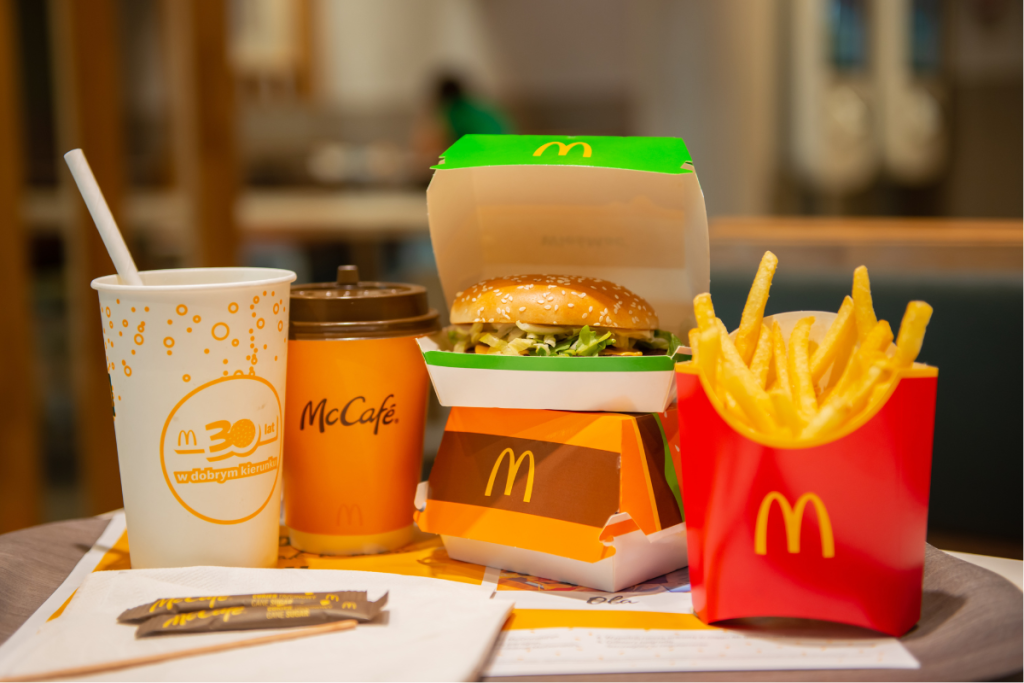
McDonald’s is reshaping how it sources, stores, and delivers ingredients across more than 40,000 restaurants worldwide. By embedding predictive analytics into its procurement model and deepening its partnership with Google Cloud, the company is not only improving efficiency but also redefining risk management in an industry where reliability is as critical as cost.
Data-Driven Forecasting Becomes Core Infrastructure
Predictive analytics has moved from a pilot tool to a central operating layer for McDonald’s. By combining machine learning with historical spend, supplier, and inventory data, the company now forecasts demand shifts, optimizes inventory, and detects disruption signals before they escalate. This shift has sharpened supplier collaboration and reinforced compliance across contracts, while also delivering faster procurement cycles and lower operating costs.
The approach is not limited to restaurants. In China, McDonald’s and its key suppliers, including Tyson Foods and Bimbo QSR, invested CN¥1.5 billion (US$206 million) to build the Hubei Smart Food Industrial Park. Smart warehouses at the site monitor stock in real time, trigger replenishment automatically, and rely on IoT-enabled cold chain systems to protect food safety from factory to counter. According to industry reports, cold chain investments globally are accelerating as quick-service restaurants seek greater control over freshness, waste reduction, and compliance.
Google Cloud Partnership Anchors Digital Transformation
A multi-year partnership with Google Cloud, announced in 2023, has been pivotal. By connecting millions of data points across restaurants, McDonald’s is turning raw information from point-of-sale systems, ingredient suppliers, and logistics networks into real-time decision support. Google Cloud CEO Thomas Kurian described the collaboration as a redefinition of industry standards, enabling faster adaptation to customer expectations and market shocks alike.
The benefits are already visible. During recent disruptions, whether geopolitical volatility or extreme weather, McDonald’s has been able to reroute supplies, adjust menus, and rebalance sourcing strategies with minimal delay. Its enterprise risk framework explicitly integrates predictive analytics, weaving together external risk signals like commodity pricing and labor audits with internal data flows to flag vulnerabilities early. CFO Ian Borden has noted that spend optimization and indirect sourcing are now tied directly to these digital capabilities, guided by McDonald’s Global Business Services function.
Predictive Analytics as Governance
The phase of predictive procurement may be less about efficiency gains and more about governance. As regulations like the EU’s Corporate Sustainability Due Diligence Directive (CSDDD) expand liability for supply chain risks, predictive analytics could evolve into a compliance tool as critical as it is operational. That reframes the technology not only as a lever for cost and resilience, but as a safeguard against legal exposure and reputational damage. The focus now needs to move from whether to deploy predictive models, to how quickly they can be aligned with emerging regulatory obligations and stakeholder scrutiny.