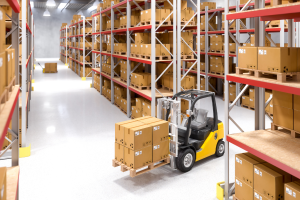
Warehouse racking safety has turned into a structural concern for warehouse networks as dense storage, tighter service promises and automation load more pressure onto steel frames. Mis-specified racks, unmanaged damage and weak inspection regimes convert quickly into blocked aisles, lost inventory, injured staff and unwelcome attention from regulators.
Treat Racking as Engineered Infrastructure
Racking behaves like any other engineered asset: performance is set at design and installation, then shaped daily by use, inspection discipline and repair quality. Regulations in many markets classify racking as work equipment, which brings duties for safe provision, use and maintenance under health and safety law, but those baseline rules rarely address the full lifecycle conditions that drive real risk.
Practical control begins with design. Load assumptions, pallet formats, handling equipment, aisle widths, automation interfaces and floor conditions all determine the structural envelope. Industry guidance such as warehousing safety codes and racking design standards sets expectations for layout, bracing, tolerances and load signage so that structures behave predictably once in service. Where racking is specified without reference to these standards, latent weaknesses can sit unnoticed until a minor impact becomes a progressive collapse.
Supplier selection therefore operates as a risk gate. Independent accreditation schemes and codes of practice in Europe and elsewhere test whether manufacturers and installers follow recognized design rules, maintain professional indemnity cover and train installation crews to documented methods. Due diligence questions extend beyond price and lead time: does the supplier design to a published technical standard, document load limits and certify that installers are trained and supervised?
Once racking is handed over, day-to-day decisions take over as the dominant risk factor. Reconfigured pick faces, SKU proliferation, heavier packaging and ad hoc storage of non-standard items can all push loads beyond original assumptions. Impacts from truck masts or pallets, often dismissed as routine, introduce local damage that changes how forces move through frames and beams. Without a governance model that links daily practice back to design limits, racking performance drifts away from what the calculations assumed.
A growing number of operators appoint a named person responsible for racking safety with clear authority over inspections, repairs and layout changes. This role sits at the intersection of health and safety, operations and engineering: checking that uprights, beams and protection are maintained, that repairs use compatible components and that any change in storage pattern is assessed against the original design. Training for this function, often based on industry-developed curricula, focuses on recognizing damage categories, understanding risk thresholds and prioritizing remediation.
Build Preventative Racking Governance Into Daily Work
Visual inspection routines form the front line of a preventative model. Competent employees walk the aisles on a defined cadence, checking for bent uprights, dislodged beams, damaged bracing, missing locking pins and signs of overloading. Their findings feed into a simple written record that assigns responsibility and timelines for corrective action, so issues do not remain as open-ended tasks. Industry reports indicate that many reported racking collapses follow periods when visible damage went unaddressed.
Alongside in-house checks, periodic expert inspections provide the deeper structural view. Qualified specialists assess overall stability, verify that the installed configuration matches design, confirm that load notices reflect actual use and test compatibility with handling equipment and any automation. Recommendations are typically grouped by urgency, with deadlines for action. Treating this as a statutory tick-box exercise leaves value on the table; using it as a design review for changing product and flow profiles turns it into a strategic control.
Training for operators and supervisors underpins both layers. Clear instruction on correct loading patterns, pallet condition, use of rack protection and reporting channels for damage reduces the volume of incidents before they reach the inspection log. Standard operating procedures that define what must not be stored in particular bays, height and weight limits, and no-go practices for truck drivers close the gap between engineering intent and day-to-day behavior.
For multi-site networks, racking governance also has a data dimension. Incident reports, near-miss logs and inspection findings across facilities can highlight recurring weak points, such as specific truck routes, aisle widths or bay configurations that attract repeated hits. Some operators integrate simple digital tools to map damage frequency by location, using this evidence to justify investment in barriers, driver coaching or layout changes where the risk profile is structurally higher.
Compliance risk remains a hard trigger for change. Regulators in many jurisdictions have the power to impose significant fines, enforce remedial work or, in serious negligence cases, pursue criminal sanctions when unsafe racking contributes to injury. Insurance carriers increasingly scrutinize racking inspection records and maintenance practices when underwriting warehouse operations, with weak governance reflected in premiums and conditions.
Where Racking Strategy Meets Network Design
Racking policy often develops site by site, yet network design decisions on inventory posture, automation strategy and service levels all depend on reliable storage structures. Treating racking standards, inspection cadence and repair rules as part of network design, not just local safety practice, gives planners a more accurate view of what each building can sustain over time and reduces the frequency of surprise constraints during peak trading or footprint change.