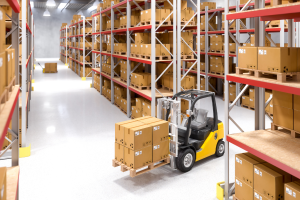
Warehouse picking strategy now determines how effectively a facility turns inventory into shipped orders, shaping labor cost, throughput, and accuracy in every cycle. As networks absorb more SKUs and tighter service promises, the choice of pick method has become a foundational design decision rather than a local process tweak.
Treat Picking Design As Network Infrastructure
Inside most distribution facilities, a large share of on-floor labor still concentrates in the pick path. Studies from consulting firms and system integrators regularly show picking consuming more than half of total warehouse labor hours, which elevates method selection to the level of core infrastructure.
Design work starts with understanding demand and product behavior, not tools. Order size, line count, SKU commonality, handling unit, and service levels define the operating envelope. Where order volumes are modest, product ranges are manageable, and travel distances are limited, a straightforward single-order approach often delivers the best mix of simplicity, training ease, and high accuracy.
Rising order counts and higher overlap in SKUs point toward batch-based methods. Grouping orders that draw from many of the same locations cuts redundant walking and can lift lines-per-hour significantly, provided that downstream sortation is structured and visible. This pattern fits environments with many small outbound orders sharing a common assortment.
Cluster approaches extend that logic by asking a picker to work several orders at once, separated physically in totes, slots, or on carts. This suits lighter items and low-cube orders where a single worker can manage multiple customer orders in parallel without creating handling risk. It loses power when products are bulky, heavy, or when the average line quantity already fills a case or more.
Zoned facilities face a different set of trade-offs. When storage is organized by temperature band, hazard class, product family, or cube, pick-and-pass flows allow orders to move only through relevant areas, with each zone specializing in a narrow slice of tasks. Parallel zone picking sends the same pool of orders to multiple zones at once and later reconciles them at packing or consolidation, reducing congestion and amplifying local expertise in each area.
Higher-volume operations often overlay structured release logic on top of these methods. Wave concepts group work by carrier cutoff, dock position, or shipping region so that picking, packing, and loading stay synchronized. Industry reports on large ecommerce and omnichannel facilities show that many now operate with some hybrid of batch, zone, and wave structures to balance dense pick paths with tight dispatch schedules.
Let Technology Follow The Work Pattern
The technology landscape around picking has expanded to include handheld scanning, pick-to-light, voice direction, mobile robots, and goods-to-person systems. These tools vary widely in cost and capability, but the return they generate still depends on how well they fit the workload they support.
Pursuing a specific technology because it has performed well in a different network, or because it features heavily at shows and in marketing, can lead to poor fits. A wholesale operation that builds pallets of full cases for less-than-truckload movement, with high quantities per line and relatively few stops, will not see the same return from voice direction as a facility that fills many small, multi-line orders with high travel and frequent bends and lifts.
Hands-free technologies such as voice or wearable scanners tend to show their strongest gains when pickers need to handle many items per hour with frequent location changes, while maintaining attention on labels, fragile packaging, or safety hazards. In those environments, shaving seconds off each stop compounds over thousands of picks per shift. Where picks per stop are already high and travel paths are straightforward, more basic scanning can deliver similar outcomes at lower cost.
The same principle applies to automation that changes how goods reach the picker. Goods-to-person systems and autonomous mobile robots can significantly cut travel time and smooth work, but they require stable volume bands, repeatable SKU velocity patterns, and careful integration with wave or order release rules. Industry benchmarks suggest that facilities achieve the strongest returns when they pair such systems with well-defined segments of inventory rather than attempting to automate every SKU.
Structured analysis should precede any major commitment. That work typically includes time studies of current travel and pick rates, segmentation of orders by size and urgency, and modeling of congestion points under different methods. Simple digital twins and simulation tools now give teams a way to test alternative layouts, zoning schemes, and wave rules before changing hardware or software, reducing the risk of locking into a method that underperforms once volume shifts.
Finance, operations, transportation, and IT also need a shared view of how picking choices cascade into working capital, carrier utilization, and customer promise. A shift that reduces travel but bundles orders into larger waves may change how often truly urgent orders can bypass the queue. Making those effects visible in advance helps align investment decisions with network-wide priorities.
Turning The Pick Path Into A Continuous Data Asset
Many facilities already capture timestamps, scan events, and exception codes along the pick path but do little with that data beyond basic productivity reporting. Feeding that same information into network planning, inventory policy, and labor strategy creates a feedback loop between daily execution and long-horizon design. Over time, that loop can anchor a more disciplined approach to picking changes, where each new method or technology is tested against a growing empirical record of how the building actually behaves under load.