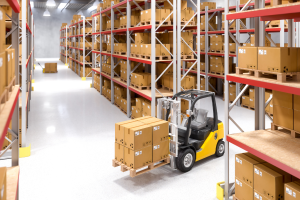
Manual sort capacity depends less on scan rates and more on how people, pallets, and packages move through the floor. As parcel volumes climb into the tens of billions per year, the limits of walking space, lane design, and interference now dictate which buildings keep up and which stall.
When The Constraint Shifts From Time To Space
Most planning exercises still start with a spreadsheet: forecast parcels per hour, divide by scans per person, then turn that into a headcount plan. The logic assumes that scan time is the primary constraint and that labor scales output in a predictable line. In high-density manual sorts, the floor rarely behaves that neatly.
The first cracks appear in physical flow. Aisles feel tight earlier in the shift, pallet positions get harder to reach, and short detours around blocked lanes add seconds that do not show up in standard productivity reports. As more destinations and build points are added, walking distance increases and cross-traffic multiplies. The operation becomes space-bounded long before anyone updates the capacity model.
The stakes rise with volume. Pitney Bowes reported more than 22 billion parcel shipments in the United States in 2024, with steady growth expected toward 2030. During peak, ShipMatrix has estimated daily demand of roughly 106 million parcels against market capacity of about 120 million. At that scale, even small inefficiencies become material; a 1 percent failure rate in on-time performance implies around 1 million delayed parcels in a single day.
On the floor, a similar pattern plays out. A fractional increase in mis-sorts can translate into a constant rework stream. Industry research cited by multiple logistics analysts puts the average cost of a single mis-pick at around 22 dollars once labor, reshipment, handling, and remediation are included. When travel paths lengthen and congestion rises, those errors and their associated costs appear at the exact moment the network can least afford them.
Operations that scale manual sorts reliably tend to invert the usual planning sequence. They start with detailed observation of scan-and-place behavior, walking paths, staging density, and lane interference. Throughput is treated as the outcome of these physical patterns, not just a target number in a plan. Upstream buffering is also deliberate: instead of flooding the floor with labor at peak, they hold controlled inventory upstream so scan teams can run at a stable, sustainable pace.
Targeted Mechanization Instead of Binary Automation Bets
Hitting the ceiling in a manual sort often triggers extreme responses. Some sites attempt to push through by loading more people into the same footprint, which usually deepens congestion and reduces effective throughput. Others jump straight to large-scale automation projects that require heavy capital, long deployment cycles, and narrow operating envelopes that can struggle with real-world variability.
A more resilient path is selective mechanization aimed at removing unnecessary movement from critical paths. Short belt runs that bridge long walk distances, assisted induction that standardizes presentation at the scan point, gravity-fed lanes that reduce backtracking, and tighter zoning that limits how far a worker travels between assignments can all extend the useful life of a manual sort. These changes alter the geometry of the work without turning the building into a rigid automated system.
Recent trade data and parcel network case studies show a broader pattern: facilities that blend human flexibility with simple mechanical aids often outperform fully manual sites on both productivity and service while maintaining better adaptability than highly automated hubs. The operating model treats complexity as a real cost. Each new lane, destination, or service tier is assessed not only for volume coverage but also for its impact on congestion, travel time, and late-stage conflicts near departure cut-offs.
Early warning signs are consistently visible for those who track them. Scan times begin to drift up despite additional staffing. Congestion clusters around certain lanes or at the edges of the floor. Rework grows, and conversations in management reviews shift from process design to individual performance, even though the underlying issue is structural. Recognizing these as indicators of a capacity transition, rather than a discipline problem, is often the difference between controlled adjustment and crisis response.
Designing The Next Constraint On Purpose
The most durable parcel and distribution networks treat the manual sort ceiling as a planned milestone, not a surprise. They expect the constraint to move from people to space, and later from space to upstream availability or downstream transport. That mindset encourages leaders to design small, reversible interventions in layout, zoning, and low-tech mechanization that release the current bottleneck while preserving options for the next one.