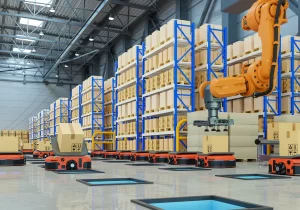
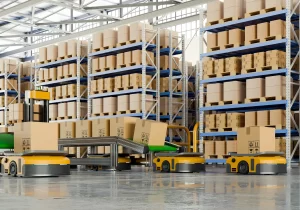
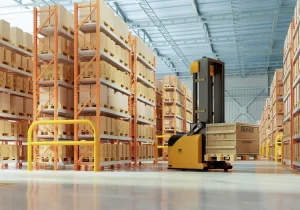
Lights-out cross docks are extending warehouse automation into the middle mile, using robotics, AI and real-time orchestration to accelerate freight movement between facilities. As these hubs become more autonomous, organizations are redesigning network execution to improve throughput, reduce dwell time and strengthen service reliability.
Cross Docks Become The Primary Engine of Decision Velocity
Automation in storage sites improves labor productivity, but automated cross docks change network behavior. These facilities sit on the critical path between plants, fulfillment centers, and regional markets, so every minute of dwell time compounds into cycle time, working capital, and service exposure across the network. When orchestration software decides routing and consolidation before a truck arrives, the cross dock stops behaving as a local warehouse and starts functioning as an execution arm of the network model.
The core shift is from local optimization to pre-planned flow. Machine learning systems run ahead of physical activity, using shipment, capacity, and timetable data to determine how each unit of freight will move through the building and onto outbound transport. This pre-orchestration reduces live decision-making on the dock, cuts rehandles, and constrains variability in how freight is treated. For a multi-node network, that consistency is often more valuable than marginal handling efficiency, because it underpins predictable lead times and more accurate promises to the market.
Computer vision and pervasive sensing then close the loop between plan and reality. Cameras and scanners create a digital representation of the building, tracking freight position, movement patterns, and the formation of bottlenecks. Instead of waiting for a missed departure or manual count discrepancy, the orchestration system sees congestion emerging and can reshuffle staging, reassign doors, or rebalance work between robots. The facility becomes a continuously measured asset whose performance is visible in the same time frame as transportation and demand signals.
From Automation Projects To Network Design Decisions
Pursuing a lights out cross dock is not an equipment decision. It is a network design choice with implications for capital allocation, risk posture, and planning logic. Once robots, conveyors, and sortation systems are dimensioned around specific flow assumptions, those assumptions become structural constraints. Throughput profiles, trailer mixes, and service policies need to be stable enough to justify that level of rigidity, or the automation will strain under out-of-pattern demand.
The decision lens needs to focus on three dimensions. First, variability tolerance, autonomous systems handle repetitive, rule-based work extremely well but struggle when freight characteristics, lane strategies, or service offers change frequently. Second, integration depth, the value of an autonomous cross dock scales with the quality of its connections to transport planning, order management, and inventory strategy. Weak data integration leaves expensive automation following outdated instructions. Third, exception pathways, the system must define what falls outside standard logic, how it will be detected, and where human judgment re-enters the process.
In practice, this means treating cross dock automation as an extension of the control tower, not as a standalone facility upgrade. Inbound and outbound plans, cost-to-serve policies, and capacity reservations should feed directly into the orchestration layer that governs robots and material handling. When a late inbound or capacity shift occurs, the same platform that recalculates routing can re-sequence dock activity, re-slot freight, and adjust trailer builds without waiting on manual coordination. This is where self-optimizing behavior emerges, the building reacts in the same planning cycle as the network.
Rethinking Labor, Resilience, and Working Capital Exposure
Autonomous cross docks change the shape of labor demand more than they eliminate it. Direct handling roles shrink, but roles in exception management, systems oversight, and maintenance increase. That transition creates short-term execution risk during ramp-up, particularly in regions where regulatory or labor frameworks slow role redesign. Planning for parallel operations during cutover, with clear criteria for when to shift more flow onto automated paths, becomes as important as the initial technology choice.
Resilience also shifts from headcount flexibility to system adaptability. Manual operations absorb disruption by adding people and hours. A lights out facility absorbs disruption by reconfiguring logic, changing consolidation rules, reprioritizing outbound lanes, and flexing between alternative transportation options. The quality of those response plays depends on how well scenario rules were defined in advance and how quickly the system can test and apply them.
Working capital exposure narrows inside the building as dwell time drops, but it does not disappear. Faster cross docks can tempt planners to push more volume into time-compressed flows with less slack. That choice reduces inventory on hand but raises dependence on continuous execution. Any planning error or upstream disruption propagates faster because there is less buffer sitting in storage. Inventory strategy and cross dock strategy need to be designed together so that the speed of the node matches the level of risk the network is prepared to carry.
Orchestration Readiness Will Define Automation Success
The long-term value of autonomous cross docks will depend less on robotics than on the quality of the planning and data that guide them. Organizations with integrated transport, inventory and execution systems can adapt freight flows as conditions change, while those with fragmented processes are more likely to amplify disruption despite higher levels of automation.